domingo, 9 de junio de 2019

LA GUERRA DE LA INDEPENDENCIA: SANGRE, PASIÓN Y LÁGRIMAS

1. ¿Qué supuso el Tratado de Fontainebleau (1807)?
El Tratado de Fontainebleau fue firmado entre Francia y España y marcó el inicio del enfrentamiento. Implicó que las tropas francesas, unos 25000 hombres, pudieran penetrar en España, camino de Portugal. Este tratado acordaba la entrada y desembarco de 25000 hombres franceses en España para invadir Portugal. Pero Napoleón incumplió el tratado intentando conquistar, no solo Portugal, sino toda la península.Supuso el inicio de la Guerra de Independencia.
2. ¿Qué bandos se enfrentaron en la Guerra de la Independencia (1808-1814)?
En la Guerra de Independencia se enfrentaron los bandos de patriotas (españoles) e invasores (franceses).
3. ¿Qué dos grupos integraban el bando "patriota"? ¿Qué los caracteriza?
Por un lado el bando patriota, que buscaba la liberación de la patria, estaba dividido en absolutistas, que luchaban por la continuidad de la monarquía absoluta y los liberales que querían terminar con ella. Por otro lado encontramos a los españoles afrancesados o Carloterceristas que luchaban por una transición de la monarquía absoluta y liberalismo siguiendo el modelos del despotismo ilustrado.
4. ¿Qué eran las guerrillas?¿Qué significa la expresión "Viva Fernando y vamos robando"?
Eran grupos armados irregulares españoles que atacaban por sorpresa al enemigo francés.
La expresión “Viva Fernando y vamos robando” era un grito patriótico que por un lado vitoreaba a Fernando VII y por otro mostraba la difícil situación de los guerrilleros que, al no formar parte del ejército regular vivían de los que robaban ya que no cobraban o recibían paga alguna.
La expresión “Viva Fernando y vamos robando” era un grito patriótico que por un lado vitoreaba a Fernando VII y por otro mostraba la difícil situación de los guerrilleros que, al no formar parte del ejército regular vivían de los que robaban ya que no cobraban o recibían paga alguna.
5. ¿Cuál fue el coste de la ayuda de Gran Bretaña?
El duque inglés de Wellington lideró las tropas anglo-portuguesas y contribuyó a la victoria de España frente a Francia, aunque nunca tuvo buena relación con los líderes españoles. Intervinieron 30000 hombres de los cuales hubo 5000 bajas, 15 piezas de artillería, 200000 mosqueteros y 90000 uniformes. Pero la ayuda británica no fue desinteresada, la intervención inglesa ocultaba propósitos económicos como el de hacer desaparecer la industria española que, si prosperaba, podría hacer peligrar las exportaciones inglesas de paños y algodones en España destruyendo fábricas textiles en Segovia y Ávila, además estos querían beneficiarse del comercio con América.
6. ¿Qué medidas fueron aprobadas por las Cortes de Cádiz de 1810?
Las Cortes de Cádiz de 1810 aprobaron una Constitución liberal (“La Pepa) en 1812 que acabó con el absolutismo y estableció la división de poderes. Las Cortes aprobaron entre otras, reformas como la abolición del régimen señorial, la supresión de la Inquisición y las bases de un Estado liberal con soberanía nacional y sufragio nacional masculino indirecto. Las Cortes de Cádiz fueron disueltas en 1813 cuando Fernando VII volvió de Francia.
7. ¿Qué batallas provocaron el final de la ocupación francesa en España?
El duque inglés de Wellington venció en la batalla de Arapiles en Salamanca en 1812 y comenzó un gran avance de las tropas anglo portuguesas y el inicio del retroceso de Napoleón. Este había mandado 700.000 hombres a Rusia para invadirla, lo que provocó una disminución del ejército francés en España, situación que aprovechó el bando español junto con las ayudas inglesas y portuguesas para expulsar a los franceses de España. Fue entonces, y tras las derrotas de Vitoria y San Marcial (Irún) en 1813 que Napoleón liberó a Fernando VII por el tratado de Valençay y un año más tarde, en 1814, las últimas tropas galas fueron evacuadas de la península.
8. ¿Qué consecuencias tuvo la guerra para España?
La guerra dejó al país esquilmado. La Guerra de la Independencia supuso grandes pérdidas para España. La hacienda quebró (sus ingresos cayeron de 1.500 millones de reales a menos de 650 millones), el Gobierno se desestabilizó y murieron 250.000 españoles en combate y se perdieron entre 350.000 y 500.000 vidas por el hambre y las epidemias. Fernando VII luchó por impedirlo pero, esta batalla fue el principio del fin del Antiguo Régimen, del absolutismo y del sistema económico señorial. En el plano internacional, supuso el inicio de la pérdida del imperio de América y el fin de España como protagonista en Europa.
viernes, 7 de junio de 2019
AMISTAD, THE MOVIE (1997)
1- What is the movie about? Summarize the plot of the film.

Amistad ship is carrying a large group of Africans who have been abducted and sold into slavery in Cuba, taken on board, and chained in the cargo hold of the ship, who were Mende tribesmen. They gained the control of their captors' ship off the coast of Cuba, and when they arrived to the U.S they get prisoned as runaway slaves. That envolved them on an international legal battle. They didn't speak a word of English, and they seemed like they are doomed to die for killing their captors when an abolitionist lawyer decided to take their case, arguing that they were free citizens of another country and not slaves at all. The case finally got to the Supreme Court, where John Quincy Adams maked an impassioned and eloquent plea for their release to the U.S. Supreme Court in 1841. Finally the prisoners returned to their home, Africa.
2- What was the triangular Trade? What nations benefited from it?

It is a historical term indicating trade among three ports or regions. Triangular trade was a type of trade across the Atlantic Ocean between three regions that took place between the 16th and the 19th century and is characterized by its triangular shape. It was a very effective commerce method that rectify trade imbalances between regions. Arms, rum, textiles and wine were shipped from Europe to Africa, slaves from Africa to the Americas, and sugar, tobacco, cotton and coffee from the Americas to Europe. The main nations that were benefited from the triangular trade were; Western Europe, Spain, Portugal, Great Britain and North America.
3- Do some research and explain the conditions in which slaves were captured and transported from Africa to the Americas.
Slaves suffered very poor conditions. Most of them had been taken from their homeland and were from different countries and cultures, so they spoke different languages. Many of them had never seen the sea before and neither a ship, besides hey had no Knowledge of where they were going or what was waiting for them. The Atlantic passage was notorious for its brutality and for the overcrowded, unsanitary conditions on slave ships. Hundreds of Africans were chained together, and the low ceilings did not permit them to sit upright. Men, as they were considered more dangerous and stronger, were shackled together in pairs using leg irons or shackles, On the other hand, women and children were kept in different quarters in the deck, but with limited freedom of movement. They were used to live without any belongs. The heat was intolerable. They could not use to the toilet buckets and it was easy to be infected by lots o diseases due to the terrible smell that was contaminating the air. Also hunger was a serious causative of get ill, because they were given some food, but only the fastest could catch it. Epidemics were frequent. The captives were often in poor health from the physical and mental abuse they had suffered. Historians estimate that between 15 and 25 percent of the African slaves bound for the Americas died aboard slave ships. Those whom died were thrown overboard, and those who were sick were killed.
4. What enlightened ideas appear in the movie?
The Enlightenment ideas tell us that the right to freedom is equal for all without subordination or subjection; and that all men should be restrained from violating the rights of others and that every person has the right to defend their life and property from such invasion. Is based on the thought of The natural state of man as freedom. The most important enlightened ideas that appear in the movie are the right of the freedom and equality. We can see almost every enlightened idea in president John Quincy Adams´ argument. His lecture is based on freedom and equality and on “The Natural Law”, which says that God has given to every human being certain rights and they can do anything to achieve that state. He also argues that there is no difference for God between black and white and defends the abolition of slavery.

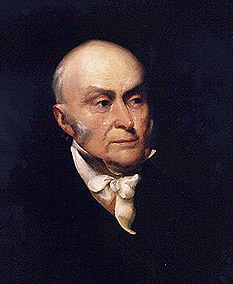 5. Who was Joseph Cinqué? Did he really exist?
He existed. Joseph Cinqué, also known as Sengbe Pieh, was a West African man of Mende. He was a rice farmer, married, with three children, when he was captured illegally by African slave traders in 1839 and sold to Pedro Blanco, a Spanish slave trader. Cinqué was taken to Havana, Cuba, where he was sold with 110 others to Spaniards José Ruiz and Pedro Montez. He was the African man who led the revolt of fellow slaves on La Amistad and also his participation in the trials. After being set free, Cinqué and the other Africans reached their homeland in 1842 in Sierra Leone.
6. What is the role of John Quincy Adams, former US President, in the movie?John Quincy Adams was president of the United States from 1825 to 1829. He argued to the Supreme Court on behalf of the Amistad captives on two separate days in 1841, the 24th of February and the 1st of March. He used philosophical arguments like the “state of nature” and legislative arguments by saying that slaves are reflected like "people with a dutie" in the Constitution of the United States.
DECLARATION OF INDEPENDENCE ESSAY
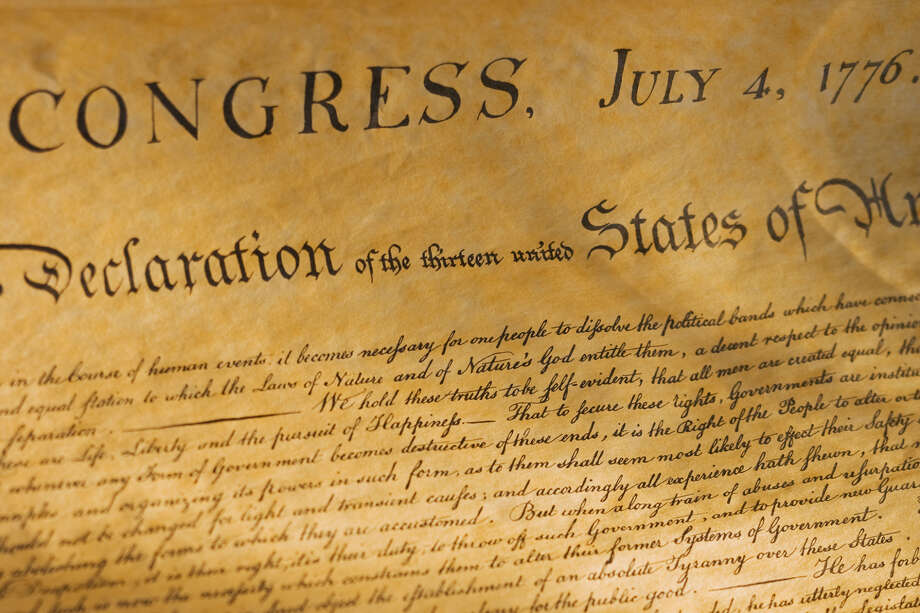
The American Declaration of Independence is a document that was approved by the Continental Congress on July 4, 1776, and that announced the separation of 13 North American British colonies from Great Britain. It was written following the concepts of both the Enlightenment ideas of freedom and liberty in accordance with "Natural Law".
I agree with Howard Zinn’s interpretation of the Declaration of Independence because he argues that the colonists upper-classes wanted to trigger revolution against England by using an “inspiring and patriotic language” to persuade the lower classes, avoiding class conflict, but stirring enough to built patriotic feelings. This leads me to think that the upper-classes used the lower classes for defending privileged economic interests and I would say that this document was used to bring together people from the colonies to protect the economic interests of the privileged Bourgeoisie.
The document says that the “all men are created equal, with unalienable rights”. The document was written to "unite large number of colonists and persuade those who had grievances to turn against England", what I think that means they were deceived and forced to follow what they were proposed; without liberty. I don’t think that ideological principles of the Enlightenment like liberty or happiness were the ones that moved the upper-class colonists to write this document and start a revolution, moreover, he says that some Americans “were omitted” like Indians, slaves or even women, so they did not had all the rights the should have.
An evidence that supports Zinn arguments is the tone, language and adjectives used in the list of grievances. A patriotic tone is used to unite colonists against England, giving examples about their brutality and destruction caused in America. Some of these injustices would affect only the rich and powerful colonists, and that makes me think that the economic is the main reason why they would want to start a revolution.
As a conclusion, I think the abusive taxes and economic problems were the main causes by which the upper-class colonists started a revolution against England. They used an inspiring and patriotic language to unite many colonists and turn them against England, thus triggering the American Revolution.
viernes, 22 de marzo de 2019

viernes, 8 de marzo de 2019

sábado, 16 de febrero de 2019
lunes, 11 de febrero de 2019
viernes, 23 de noviembre de 2018
miércoles, 21 de noviembre de 2018
JOSEPH MCCARTHY AND MCCARTHYISM QUESTIONS

1.Who was Joseph McCarthy?
Joseph McCarthy was an American politician, and served as an U.S. Republican Senator
from Wisconsin from 1947 until 1957.
from Wisconsin from 1947 until 1957.
2. What were his politics?
His politics were based on McCarthyism that was an anti-communist crusade, named like
this because of McCarthy, who used brutal interrogation methods and accused a lot of people
of being communist agents or carrying out un-American activities.
this because of McCarthy, who used brutal interrogation methods and accused a lot of people
of being communist agents or carrying out un-American activities.
3.What were the first accusations he made?
The firsts accusations he made, or at least one of the first ones, was in 1950 when he gave
a speech during he showed the audience a piece of paper with a list of the names of 205
suppose active communists working in the State Department.
a speech during he showed the audience a piece of paper with a list of the names of 205
suppose active communists working in the State Department.
4.Why do you think the American public believed him?
I think that American public believed him because they were afraid of communist infiltration
in their society and because he used controversial techniques that made people believe him.
in their society and because he used controversial techniques that made people believe him.
5.What other people did he go on to accuse? What were foundations for his
accusations?
accusations?
McCarthy accused government employees, trade union activists and people in the
entertainment industry like Hollywood actors and directors. He also accused officers from
the U.S. Army for being communist agents. All his accusations were made with very poor
evidences.
entertainment industry like Hollywood actors and directors. He also accused officers from
the U.S. Army for being communist agents. All his accusations were made with very poor
evidences.
6.How and why did the reaction of the American public change?
The reaction of the American public changed when his brutal interrogation methos were
revealed in 1954. The support for McCarthy quickly dimished and he was censured by the Senate
for having abused his power as a senator.
The reaction of the American public changed when his brutal interrogation methos were
revealed in 1954. The support for McCarthy quickly dimished and he was censured by the Senate
for having abused his power as a senator.
CUBAN MISSILE CRISIS, LETTER TO J. F. KENNEDY

Mr. President Kennedy:
We have a controversial problem with the USSR and the possibility of a confrontation that could drive our country to an imminent nuclear war, and many and differents options to solve it, each one with its possible consequences.
As I am your defense advisor I am going to introduce you the complicate situation in which we are. I have a confident and reliable source of information that claim that the USSR are building nuclear missile sites on Cuba, a communist country very near to our nation. This could be very dangerous amenazzy to us, because from there to the United States, a nuclear missile can reach and kill thousands of people here in just more less ten minutes. We have to intercede immediately because their ships are on the way to Cuba carrying the nuclear missiles. These are my following recommendations; I wish you take the best option and overcome this difficult situation.
The first thing we must have in account is the security of our cityzens. We could strike first, because we have enough arms, and specially for these case, missile and nuclear power. But that would mean the ending of our resources to in that moment defende us, and the beginning of a possible nuclear war; so I do not think that one is the best opcion.
Another option could be to invade Cuba and destroy the missile sites one by one; nevertheless Cubans would intercept you before our army could do anything, and as the previous option, I do not think it is a good idea.
The best opcion I think it would be to round with our ships Cuba, to block the missiles, and make as this way time waiting to have the option of a negotiation. If we do that, there could be a period of tension within the negotiation but I think it is the only option to prevent a nuclear war and the dead of civils, and have the chance of getting into an agreement.
As a conclusion, I would recommend you to set in motion the last option immediately.
Your defence advisor: Gala Mayado
Members of the group: Elena Fernández, Gala Mayado, Andrea Rapado and Aitana Rodriguez.
domingo, 28 de octubre de 2018
miércoles, 13 de junio de 2018
jueves, 7 de junio de 2018
AMARÁS AL LÍDER SOBRE TODAS LAS COSAS - DOCUMENTARY
1. Do some research and explain the origin of the North-Korean communist regime.
When World War II ended in 1945, Japan lost control of Korea to Allied forces. In much the same way that Germany was split after the war, Korea was divided at the 38th parallel, with the Soviet Union administering the northern half and the United States administering the southern half.
The foreign administration of North and South Korea was intended to be temporary, and plans had been laid for free elections in the two districts. However, in 1948, Kim Il-sung, communist-aligned leader of the Korean People’s Army, convinced Soviet leaders not to allow UN authorities north of the dividing line. So the election never took place in North Korea.
By the end of 1948, two new nations had been formally established:
The Republic of Korea was established in the south, led by the democratically elected President Syngman Rhee.
The Democratic People’s Republic of Korea was declared in the north, with Kim Il-sung established as Premier (with support of the USSR).
Most US forces had left South Korea by the summer of 1949, leaving behind a weak government and inexperienced army. North Korea, on the other hand, had the financial and military backing of the USSR and China and had built up a strong army.
The separation point between the two factions — the 38th parallel — was a focus of constant bloody skirmishes for two years. Then, on June 25, 1950, North Korea made a surge into South Korea. The Korean War that followed pulled in forces from the United Nations, the United States, and China, as well as military advisors from the USSR. It lasted until 1953, when the Commander-in-Chief of UN forces, the Supreme Commander of the KPA, and the commander of the Chinese People’s Volunteers signed the Korean Armistice Agreement.
The Korean Armistice Agreement re-established the line of division at the 38th parallel, with a demilitarized zone extending two kilometers in both directions.
After the war, Kim Il-sung set out to purge North Korea of his enemies, both real and imagined. By 1961, the last vestiges of opposition to Kim had disappeared.
The organizational structure of North Korea was modeled after that of Stalinist Russia, with a large focus on military build-up and heavy industry, especially mining. Kim stuck with his Stalinist philosophy even as his communist neighbors evolved their governments.
In the 1970s, North Korean mining production had reached its peak. Sudden rises in the price of foreign oil combined with falling prices for North Korea’s native minerals hit the economy hard. Surrounding nations began building up economies based on computers and other technology, a shift that North Korea — so focused on mining and military might — was unable to keep up with. Kim made the tough decision to take on foreign debt to keep the economy afloat.
Throughout the 1970s and 1980s, relations between North and South Korea, as well as between North Korea and the rest of the world, were a veritable roller coaster. Discussions about reunifying split families, co-hosting the 1988 Seoul Olympics, and economic cooperation started, stalled, restarted, and failed. International tensions mounted, too, as North Korea announced its growing nuclear program, which included experiments in uranium enrichment, a first step in the creation of nuclear weapons.
Both North Korea and South Korea officially joined the United Nations in September 1991. The 1990s were characterized by unkept promises from North Korea to shut down or freeze various parts of its nuclear program and to allow international inspectors to examine their nuclear capabilities in exchange for oil and aid. Using their nuclear program to elicit international aid would become a common theme in the decades to come.
Kim Il-sung died of a sudden heart attack on July 8, 1994. Although the means of succession had not been strictly set down, Kim’s son, Kim Jong-il, succeeded his father by becoming the chairman of the most powerful state institution in the country, The National Defense Commission. Kim Jong-il adopted an ideology known as Songgun — “Army First” — which transformed the country from a traditional communist government to a military dictatorship.
North Korea’s nuclear ambitions were overshadowed by famine in the late 1990s after the country suffered first through horrific flooding and then through drought. Because of famine, a failing economy, and a disintegrating infrastructure, North Korea now relies on international aid to keep its citizens fed.
In 2005, North Korea announced that it had completed its first underground nuclear test, and its ongoing nuclear program continues to be a point of contention in the international community. Outcry over unconfirmed violations of human rights by the North Korean government has also stymied international acceptance.
Kim Jong-il died on December 17, 2011, and his son, Kim Jong-un, took power.
2. Find three recent news about North Korea from different digital newspapers and include the headings and the links to them.
North Korea news
President Trump to Meet Kim Jong-un of North Korea
President Trump: North Korean summit a 'mission of peace'
3. What are the names of the North-Korean leaders mentioned in the documentary? Who is the current leader of the country?
The documentary mentioned: Kim Il Sung, Kim Jong Il and Kim Jong Un.
 | |||||||
Kim Il Sung that was the first Supreme Leader of North Korea from its establishment in 1948 until his death in 1994 and he is considered the eternal president of the country. |
 |
His son, Kim Jong Il, was the leader of North Korea until he died after a heart attack in 2011. |
 |
And finally the current leader of the country is Kim Jong Un, Chairman of the workers' party of Korea. |
4. What are the instruments used by this lidersto mantein this dictatorial regime?
The main instruments they use to maintain this dictatorial regime are the isolation of the inhabitants and the lack of real information. People are educated to think in a certain way and only believe what the leader says, moreover, this education is usually based on fake or exaggerated events or evidences. People have not access to information, there is no internet, no access to books that can go against regime, etc, and if someone question the lider, he will be punish.
5. What´s the meaning of the word "Gulag"? Where does it come from? Is there anything similar in North Korea?
The word Gulag was firstly used by a Communist Party of the Soviet Union to mention a type of concentration camp where they sent criminals but also politicians. In North Korea a Gulab is a labour forced camp for political prisoners. It seems like as a reeducation camp for those who need to correct their behaviour. A forced-labor camp for political dissidents and for people with mental or physical disabilities.
6. According to the video, what are the main characteristics of a dictatorship?
La dictadura es un estado totalitario que controla todos y cada uno de los aspectos de la personalidad humana, y lleva en su seno todas las actividades humanas en los ámbitos social, económico, político, educativo, religioso y cultural. In dictatorship only one party is allowed to exist and it is the dictator's one. Other political parties, associations and organizations are not allowed to function. These are banned in any opposition to the dictator is ruthlessly suppressed.
Also, the leadership is given to a single man, full faith is to be concentrated in the leader because the leader is supposed to represent national unity, he is considered to be a symbol of national prestige. He is the final authority in every matter and his word is supreme and no criticism against himr is tolerated. People are supposed to believe and obey. The president is regarded as God on earth. The state is considered to be the end and the individual a means to that end. People are supposed to sacrifice their lives on the altar of state. Democratic slogans of liberty, equality and fraternity are replaced by slogans like duty, discipline and sacrifice.
People does not enjoy any liberty or rights under dictatorship, they are not allowed any liberty of speech, association or press. All agencies of education and propaganda such as schools, colleges, radio, papers or films are controlled by the state.
Dictators glorify war and we have seen it in the video. The dictators adopt a war-like policy and glorify brute force as the means for achieving national greatness and they also preach racialism.
7. Compare the life of a North-Korean family with your own. In addition, try to describe the life of a North-Korean teenager of your same age.
If I compare my life with the one of a North-Korean family, I realise that I am so lucky, because I can express my ideas and opinions freely, contrast any type of information, travel all around the world in order to know other cultures and form my own ideals, study what I really like, whatch TV, wear what ever I want and other things that we do in our day a day and that they can not.
martes, 29 de mayo de 2018
LIFE EXPECTANCY
Highest life expectancy
Lowest life expentancy
Humans life expectancy is growing thanks to to medical advantages and lifestyle improvements. Our longevity has been increasing over the past century, not only the average life expectancy since 1900, but a larger number of people are living to older ages. An important datum is that developed countries have a higher life expectancy than developing ones. There are nine factors that could determine mortality and longevity. Now, I am going to analyse them.
First of all we can talk about the gender. Females, according to different studies, have a lower mortality rate than men. This has different causes, historic and genetic ones. Throughout history, men have had harder works while their women were taking care of their childs and houses, so females had a healthier life. Because genetics may play a role in nine of the top 10 causes of death, according to the Centers for Disease Control, regarding to a genetic factor we should analysed the impact of some components of women's bodies that low the risk of suffering some diseases, like estrogen, that protects them eliminating cholesterol, lowering the risk of suffering heart diseases. Both causes could be causing a lower women mortality average than in men. As a conclusion we can say that in addition of gender, there are also genetic factors that determine humans life expectancy.
Secondly, we can talk about prenatal and childhood conditions, that are usually associated with higher mortality, even at advanced ages.
In addition, the marital and the socio-economic status are very important. Regarding to Marital status, several studies confirm that married people have lower mortality rates than those who were never married, divorced or even widowed and, regarding to the socio-economic status, we can say that if you are living a bad economic situation, it could affect the access to medical care and resources in some cases. Education is related with this because higher education levels are linked to higher socio-economic status and both are linked to improved longevity. As well, ethnicity could affect mortality rates.
Talking about the lifestyle, we can say that factors as unhealthy diet, tobacco use, alcohol, obesity affect it, as well as a warmer climate is associated better health.
Finally, the advances in medical technology such as the development of antibiotics and immunizations, the surgery, the cardiac care and organs transplants and others, have all helped push the average life expectancy higher.
The countries with the biggest life expectancy that are show in the maps are: Japan, Switzerland, Singapore, Spain, Australia, Italy, Iceland, Israel, France and Sweden in the order in this order.
First, as I explained before, we can analyse gender in those countries, and conclude that women live more than men, for biological, genetic and historic causes.
On the other hand, regarding to prenatal and childhood conditions we can argue that in developed countries such as this ones, are better.
But there are more reasons that make life expectancy grow, like the marital status or socioeconomic, or the medical technology, that are very important. But the main factor which affects mortality is lifestyle, that is much better in developed countries.
On the other hand, and talking about countries that are less developed, we can say that these ones have less live expectancy, they are: Sierra Leone, Angola, Central African Republic, Chad, Côte d´Ivoire, Lesotho, Nigeria, Somalia, South Sudan and Cameroon.
There are very notable differences between developed and underdeveloped countries. Some of the most common factors of mortality in these countries are; absence of vaccines, bad nutrition and poor education in children under ten years.
Regarding to the time of being mother, motherhood will be different between the two countries, it would have difficulties. Finally talking about teenagers and adults, the type of food, the illnesses, the lifestyle are relevant. Many food they eat, most of it comes from animals that have diseases that affect human. They live in shanty villages surrounded by lot of bacterias and viruses because the lack of human rights, money and medical advantages.
lunes, 28 de mayo de 2018
ANALYSIS OF A POPULATION PYRAMID
A population pyramid is a traditional way of visualizing and explaining the age structure of a society. It is a graph that shows the structure of a society by sex and age at a given time and place.
The pyramid I am going to analyze shows us the demographic structure of country 1 in 2012.
First of all, I am going to explain the sex structure.
Females, according to different studies and as we can see in the graph, have higher life expectancy. This has different causes, historic and genetic ones. Throughout history, men have had harder works while their women were taking care of their childs and houses, so females had a healthier life. Because genetics may play a role in nine of the top 10 causes of death, according to the Centers for Disease Control, regarding to a genetic factor we should analysed the impact of some components of women's bodies that low the risk of suffering some diseases, like estrogen, that protects them eliminating cholesterol, lowering the risk of suffering heart diseases. Moreover, observing the sex ratio, we can say that more boys than girls are born, by looking the base of our pyramid, that is a datum that we can see in graphs of countries all around the world, this may be because of genetic and biologic reasons.
On the other hand, regarding to the pyramid structure, we can say that it has the expansive pyramid profile with the characteristic pagoda shape with a broad base, which indicates that the birth rate is high, and a very narrow trunk and cusp, which indicates that the life expectancy of the society is very low, the mortality is very high and society has very low aging. As a conclusion we must say that it is a not developed country in which the young population, is the highest and birth rate is very high: 39.29 ‰, the population increase in the first years of young life, but then the rate decrease, what indicates that the infant mortality rate is very large: 121.6 ‰. The adult population, is very low. This indicates that the mortality rate is very high, 14.5 ‰, with a life expectancy of 49.7 years. The elderly population is very low, so we must say that life expectancy is low.
To end, I am going to describe the transition model that is show in this pyramid.
First, we can say that the in the graph there are not important variations which means that the country follows a constant line, without ups and downs caused by wars where men would be in lower percentage. As a conclusion, and regarding to the information that we have contrasted, we can say that the country we are analyzing is in the first transition model, and it will advance to the second one, in which natality will still high, mortality will decrease and as a consequence it will have a demographic expansion and of growth.In this model, there will be investments in health, access to vaccines and medicines and water treatment, to promote the development.
domingo, 27 de mayo de 2018
viernes, 4 de mayo de 2018
SPAIN AND GERMANY
Germany:
The top 10 countries from which Germany receive immigrants are Poland, Turkey, Russia, Kazakhstan, Romania, Czech Republic, Italy, Ukraine, Austria and Greece, and it is the country with more immigration of the European Union.
We can differentiate between less developed countries like Turkey or Kazakhstan from which their emigration is caused by the political instability of these countries and the search for social and economic opportunities abroad. The pushing factors could be the lack of jobs there, the social inequality or the bad living conditions because as we can see, those other countries have a worse economic situation.
Immigrants prefer this destiny because it has better salaries, easily access to services and better living conditions and also because of its social benefits and for a series of guarantees that the Constitution establishes as the right of asylum, which is more developed compared to the rest of the European countries. As soon as they set foot in the country, the German law attributes to the State the responsibility to feed, provide medical services and accommodation to any kind of refugee. Other countries such as Italy or Greece, that are members of the EU and whose inhabitants immigrate to Germany, may go looking for better salaries and work important industries that have headquarters in that country and can attract workers from other countries. Another attraction factor could be the prosperous economy of this country, one of the most developed in EU.
On the other hand, emigration from Germany moves princilly to the United States, Switzerland, the United Kingdom, Turkey, France, Austria, Italy, Kazakhstan, Spain and Canada. Usually this people migrate to countries that are developed such us Spain or the United Kingdom were they look for jobs and good salaries in this countries that have sustainable economies. They may go away of their origins also because they want to live in a place with better weather.
Spain:
The top 10 countries from which Spain receives immigrants are Morocco, Romania, Ecuador, Colombia, United Kingdom, Argentina, France, Germany, Peru and Bolivia, in this order. We can see that this countries have worse economic situations, so the pushing factors could be the lack of jobs there, the social inequality or the bad living conditions, if we talk about countries like Peru, Colombia, Bolivia, Ecuador… Spain has a strategic location and share language with Latin America so this could be an attracting factor for these Latin countries, but there are other attracting factors like better salaries, or the access to services and better living conditions that attract people for different and variegated countries that are less developed. Spain also receive immigrants from countries in the EU, like Italy, Belgium, UK… In these case the reason could be our climate or the offer of work in some important industries have headquarters here.
On the other hand, emigration from Spain moves to France, Germany, Argentina, United States, United Kingdom, Venezuela, Switzerland, Belgium, Brazil and Mexico mainly. We have been submerged in an economic crisis and this has caused a growth of emigration in our country. People emigrate looking for work and better salaries and there are cases of people who decide to move from city or country because they have the chance of study some course or profession in an institution.
Europa is a very good place to live in because this union promotes the intercommunication of states and improves economy and citizens’ well-being. It has an unique international market that suppresses borders and that establishes an economical collaboration between its countries, helping to avoid inequality between its poorest and richest regions; due to that, it is one of the most desired destinations by immigrants because of the economic and social stability. Those migration is mainly caused by pushing factors, containing economic, social and natural conditions and, in turn, some attracting factors for immigrants, also economic, social and natural.
Spain and Germany belong to this institution and now, we are going to analyse the migration trends of both countries in two ways: First of all, we are going to talk about immigration and finally about their emigration.
Regarding to immigration and economy, we have two general factors that contrast and could create controversy; the ones that helps to improve the country and the ones that do not beneficiate it. The countries that nowadays have more immigration are the developed ones. People usually think that the arrival of foreigners is a problem for their stability, but it is not true. In the destination country, social security improves, while employment aggregates consumption, fiscal policy and monetary and economics growing. But it is also true, that depending on the country situation, this arrival could increment unemployment, reduce salaries and damage social security. One attracting factor for immigrants is the economic stability.
In the other hand and talking about social effects, we can say that there is a small cultural shock between the local residents and the new ones because of their habits, traditions, religions, beliefs and healthy conditions are usually different. Although I think that this point should not be a problem since it could create diversity and help globalization. Immigrants could feel outcasts and isolated because the loose of social supporting. Another attracting factor for immigrants is the social stability and the fact of living in a place with less violence and a minor probability of suffering a war conflict. Also because of the better healthy conditions, since they have less possibilities to be infected by an illness.
In some countries, where immigrants come from, there are usually natural disasters, so they sometimes run away of this.
As a conclusion, we can say that immigrants are looking for stability.
Spain principally receives people from Morocco, Romania, Ecuador, Colombia, United Kingdom, Argentina, France, Germany, Peru and Bolivia, in this order, having one of the biggest immigration rates. Our country has a political immigration relatively permissible and because of that, and also due to its geographic position, is one of the most busiest borders of Europe and the main one used by latin americans and africans; this point stimulates economic expansion and increases labour forces. They also help Spanish economy by paying taxes, taking into consideration all the economic, social and natural factors that we have analyzed before. Another important fact to analyse in our country is that we have a very aged population and we need immigrants who help us to increase natality, a way to improve our demographic situation.
Germany principally receives people from Poland, Turkey, Russia, Kazakhastan, Romania, Czech Republic, Italy, Ukraine, Austria and Greece, and it is the country that more immigrants receive in the European Union. This country is being pressure by people that are running away from Syria's war and whose only dream is to have a better live. Spain and Germany are so similar, so regarding to the facts that we explained before, immigration would be mostly good for both countries taking into consideration demography, social and economic facts, health and natural factors.
Now let's talk about emigration. In the first place, we can say that when someone is emigrating, they leave their country of origin to settle in another region, especially due to economic or social reasons. When we analyze the country of emigration, we generally see that the emigrants send money to their families, and as a consequence, the economy of these countries benefits, but they also lose workers, making the labor forces worse. Taking into account the social effect, the emigrant countries reduce social conflicts, but they lose population, birth rate and society is unbalanced and, in terms of cultural effects, the emigrant countries benefit in education, but they lose identity and tradition.
Today, Spain is sending people to France, Germany, Argentina, United States, United Kingdom, Venezuela, Switzerland, Belgium, Brazil and Mexico mainly. Our country has become one of the European countries with the highest emigration rate. Although most of people left Spain because they did not have a job, some also did it to improve their careers.
On the other hand, emigration from Germany moves to the United States, Switzerland, the United Kingdom, Turkey, France, Austria, Italy, Kazakhstan, Spain and Canada.
miércoles, 2 de mayo de 2018
A LOMOS DE LA BESTIA - DOCUMENTARY
1. Summarize in a few lines the documentary.
This documentary talks about the illegal migration of people riding the dangerous and treacherous train called “La Bestia”. This train helps every day hundred of Central Americans to cross Mexico, trying to reach the United States boundaries, trying to settle there, to improve their living conditions. Only few of them achieve their wishing goal, because it is a very dangerous and long trip, in which humanity does not exist. Illegal immigrants face kidnapping, murder and rape by the hands of violent drug cartels and ever more ruthless human smugglers. Crossing treacherous desert areas makes the travelers to expose to heat exhaustion and dehydration. The documentary shows us the awful conditions in which this people are trying to survive, running away of their countries, leaving there their belongings and families, wishing they would have a chance of recovering their freedom and get some money, without paying attention to the possibility of dying along the trip. Through touching and impressive images, this documentary shows us the feeling of helplessness and vulnerability in which immigrants are exposed to.
2. Why is the train called the Beast?
This train is called “The Beast” because it destroyes immigrants' dreams and goals in its dangerous route from Mexico to U.S.A boundaries. People usually fall down of the carriages, being mutilated because of the speed of the train. Criminal acts committed against illegal immigrants include kidnapping, robbery, extortion, sexual violence, and death at the hands of cartels, smugglers, and even corrupt Mexican government officials and “collotes” or “polleros”. Many also were reported being deprived of food, or even beaten, tied, gagged, blindfolded, drugged, or burned. There is an obvious lack of humanity and, as a consequence, people call this train "la bestia". Immigrants life´s testimony shows us that the name of this train describes the treacherous travel they follow, looking for the American dream.
3. What countries are the immigrants from? Where do they go?
Immigrants that rides the Beast are mainly from Central and South America. All of them are looking for a better life, The American Dream. The majority comes from El Salvador, Guatemala, Honduras, Nicaragua and Mexico. There are also alternative routes by the sea that are principally used by people fom Cuba, Haití and the Dominican Republic. Mexico serves as a starting point as well as a path of transit for people across Latin America seeking illegal entry into the United States. These individuals travel from their homeland throughout the region to Mexico’s shared border with Guatemala and Belize and then they go across other regions to their finish line, U.S.A.
4. What is the academic professional experience of the immigrants?
When Sistiaga board on the train, he met Marvin, Edgar, Miguel and Juan Carlos, his traveling partners. Marvin López is a Honduran carpenter, and the first immigrant that Jon interviewed. The second one was Edgar Vázquez, a Salvadoran who wanted to settle in Chicago. When Sistiaga stopped in “Jesús el buen Pastor” shelter, a hostel for people who had being mutilated by the train, he met Miguel Távora; he was also a Honduran immigrant from San Pedro Sula, one of the most violent cities of the world. He was trying to cross U.S.A border to reach Los Ángeles to work as an electrician and keep playing football. He met there also Marizza, who wanted to work as a house servant to send money back to her family to pay the education of her child and Fredy González who wanted to settle also there and work as a painter; both came from Honduras. In another stop, in Arriaga, Oaxaca, he interviewed Byron Campos, a Salvadoran immigrant who wanted to work as an air conditioner technician. There he also met Morena Alfaro, another Salvadoran girl who explained the lacks of respect and the agressions that women suffer in this travel. She told us that she prostituted herself to move forward from Vera Cruz to Tierra Blanca. She did not do it for money, she only wanted to survive and continue the trip, and it was the only thing she could do. When Jon said goodbye to his traveling partners, he talked us about one of them, Miguel Guerra, an Honduran draftsman whose only wish was to be useful for society. When he stopped in Medias Aguas, in Vera Cruz, he went to Santillos hostel, where he met Dimas Ernesto, an Honduran immigrant who wanted to cross the border and have the chance to settle and work there as a welder and also Rubén Avilés, another Honduran man who only wanted to pass to the U.S.A. As a conclusion, we can say that almost all the migrants who crossed the border with Sistiaga had studied and wanted to settle and also work, so that would had some benefits to the immigration country, not only economic, also social and cultural. Regarding to economy, we can discuss about the arrival of immigrants, affirming that work and consumption would increased. They also would have to pay taxes and they probably become a labour force. In another hand, talking about social effects, we would say that population and natality would increase and if this immigrants have academic or professional qualifications from their country they would work as native people, and ending, as a cultural positive effect, we would said that immigrants often bring to the immigration country languages, traditions, values and cultures that are different to natives ones, so as a consequence, they create diversity.
5. What dangers do immigrants face during the journey?
Trying to immigrate illegally comes with tremendous risks, including kidnapping, extortion, injury, and death. Immigrants, especially woman and unaccompanied children, are too vulnerable and prone to get danger in this risky travel but they face the dangers and cruelty of this daily hell with courage and hope. All irregular migrants are at risk of abuse; they face serious risks of trafficking and sexual assault by criminals, other migrants and corrupt public officials. Very few of this abuses are condemned. Smugglers, that often ease the means of travel, are known to leave behind people who fail to keep up with the group due to exhaustion, injury, dehydration or simply their age. Furthermore, immigrants seeking to cross the southern border illegally increasingly do so in desert regions where the extreme heat can lead to over-exhaustion and death. Those left behind often lack of food and water, and face little chance of survival. Illegal immigrants may also be packed into trucks, hidden under seats, or smuggled in trunks to avoid detection. There they risk death and injury from suffocation or overturned vehicles. As we can deduce, the dangers in their day by day are countless, and, as a consequence of this journey, lots of them die.
6. What type of migratory routes are described in the documentary?

One of the world's busiest migrant corridors runs from Central America through Mexico.
For decades, migrants from the northern triangle of that region (Honduras, El Salvador and Guatemala) have fled countries plagued by endemic levels of violence and crime in the hopes of crossing the Mexican border and eventually seeking asylum in the United States, looking for the American Dream. The route that the documentary describes is the Central American Route, that goes across Panamá, Guatemala, México and finally the arriving to the United states. Many immigrants have took the treacherous north journey along smuggling routes, increasingly controlled by drug cartels, towards the U.S. border.
Talking about countries that receive immigrants, we can analyse it in two ways. First we can talk about the economy; we can say that the arrival of immigrants benefits the economical increasing of the country and provide labourforce to make those works that people who are living there, do not wanted to make and they also have to pay taxes and also consume.
The work of immigrants becomes a condition of economic growth, which will also be increasingly necessary due to the progressive aging of the population. Foreigners are blamed for economic problems, people have a wrong view of their impact on the economy. But I think that this is not the main problem, Undern my viewpoint, immigration is a challenge for cohabitation, social connection and increased of diversity and, overall, it increases natality, a very big problem in our society. As a conclusion, immigration is a very important factor in the development of the world and the war against poverty.
In the other hand, regarding to countries that send immigrants, countries of origin, social and political conflict could be reduced when a significant percentage of the productive population decides to emigrate. Thus, the levels of unemployment and discontent would decrease, since apparent possibilities would be created as a result of this movement of people towards other regions. Another possibility is that with the loss of the population, there is a decreasing in the possibilities of the economies whose development is based in its internal market. And as a conclusion of analysing emigration, the capacity for consumption of families can increase; as long as the migrant has been integrated into the receiving society, so that he is in a position to send his family a part of the money that he earns.
Hundreds of people die everyday because of immigration. In my personal opinion, citizens and countries leaders, do not want to interfere in this delicate theme and because of that, no one tries to improve their living conditions or even facilitate their dangerous travel to a better life, making them having psychological and physical damage. I think that immigration should be address with more sense, because all human should have the right to have a full life. I wish that in few years those poor countries that are being devastated because of wars and illnesses, could improve and become growing countries. As a final conclusion I would say that for me, immigration is a good supporting tool for globalization and to increase diversity.
Suscribirse a:
Entradas (Atom)
-
 A topographyc profile is the graphyc representation of the relief of an area, obtained by cutting transversaly the contour lines of a...

